Blog · Ladders and fall protection
Ladder Extension Above Landing and the 3-Foot Rule
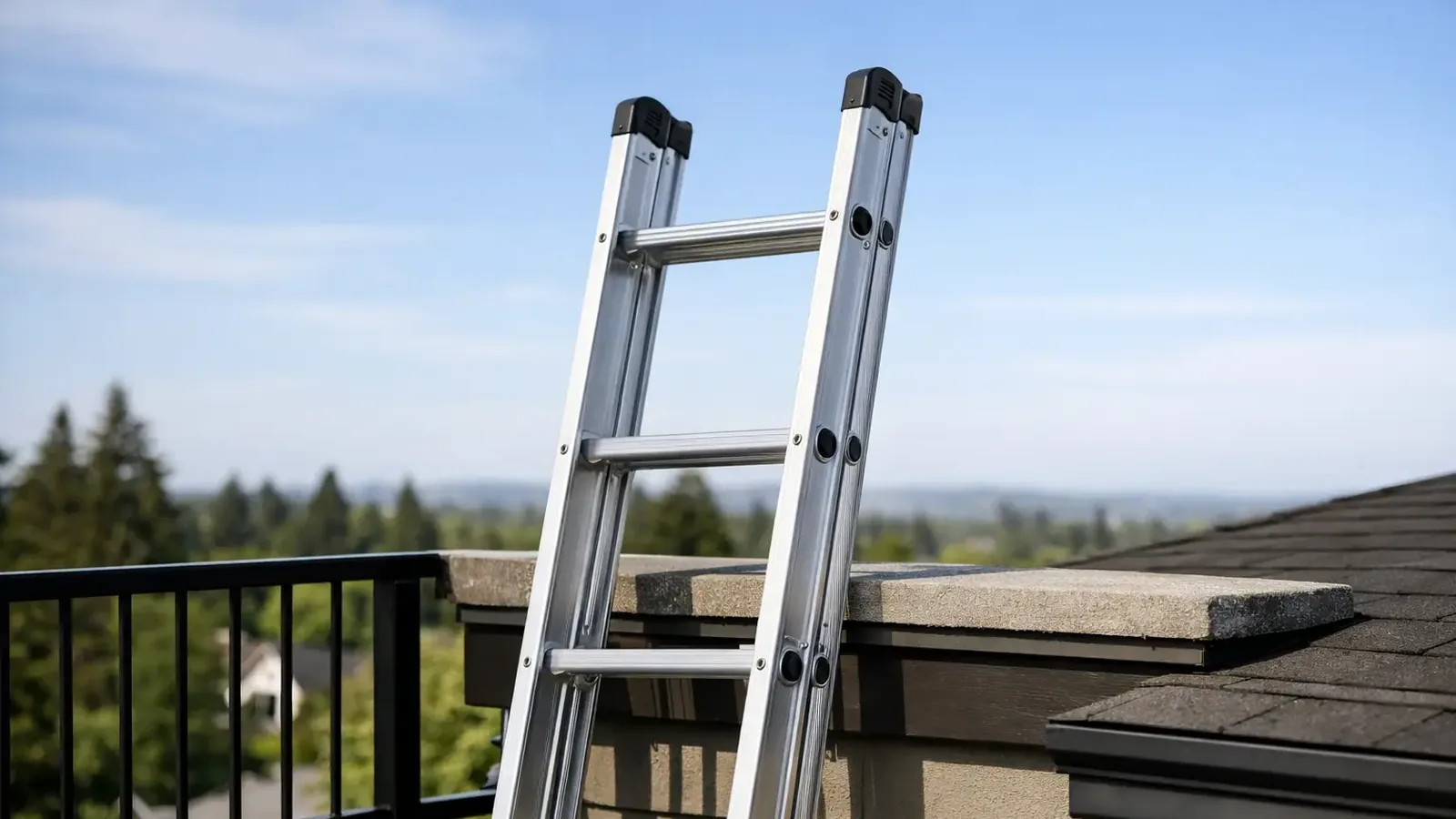
A worker climbs an extension ladder to a roof, loading platform, or mezzanine edge. The rails stop level with the landing. He has to grab the deck, shift his weight sideways, and step around the ladder at the same time. That is the exact moment the ladder extension above landing rule is meant to control.
The three feet above the landing is not a paperwork measurement. It gives the climber a handhold during the most awkward part of the trip: getting on and off the ladder. If the rails end at the edge, the worker is left balancing on a rung while reaching for whatever is nearby. A loose guardrail, a roof edge, a pipe rack, or nothing at all is not a safe handhold.
The ladder extension above landing rule
For portable ladders used to reach an upper landing surface, OSHA's construction standard, 29 CFR 1926.1053(b)(1), requires the ladder side rails to extend at least 3 feet above that upper landing surface. OSHA's general industry ladder requirements contain the same basic expectation for access ladders.
An upper landing can be a roof, floor, scaffold platform, elevated dock, mezzanine, tank top, or any elevated surface the worker is stepping onto. It does not matter that the climb is short, the task will take five minutes, or the worker has made the trip a hundred times. If that ladder is the access route, the transition must be protected.
There is a limited exception when extending the ladder 3 feet is not possible because of the ladder's length. In that case, the ladder must be secured at the top and a grasping device, such as a grabrail, must provide a secure handhold when the worker steps on or off. “Just hold the roof edge” is not a grasping device. Neither is a piece of conduit, a light-gauge guardrail, or a coworker's shoulder.
The practical rule is simple: if workers cannot keep a hand on a secure ladder rail or equivalent handhold through the transition, the access setup is not finished.
Three feet is only one part of a usable setup
A ladder can clear the landing by three feet and still be unsafe. The top must bear against a sound support, the feet must sit on a firm level surface, and the ladder needs the correct climbing angle. For a non-self-supporting ladder, use the 4-to-1 setup rule: place the base 1 foot out from the support for every 4 feet of working length to the top support.
For example, if the upper support point is 20 feet above the lower level, set the feet about 5 feet away from the wall or landing edge. Set it too steep and it can tip backward. Set it too flat and the feet can kick out. Either mistake gets worse when the worker is stepping through the landing transition.
Secure the ladder to prevent displacement. The best arrangement is to tie or otherwise secure it at the top, and secure the bottom when conditions require it. A second worker holding the base may help during setup, but it is not a substitute for securing the ladder for the job. People get pulled away. Production starts. The person who said, “I’ve got it,” is suddenly running a forklift or answering a radio.
Do not set the feet on pallets, boxes, drums, mobile equipment, scrap lumber, or a stack of anything. Do not improvise height by placing the ladder on a scaffold platform unless the setup is specifically designed and approved for that use. Raising the base changes the fall exposure and often creates a platform that can move before the climber realizes it.
Measure the rail, not the last rung
The required extension is measured from the upper landing surface to the top of the ladder side rails. Workers sometimes look at the last usable rung and assume they have enough ladder. That is the wrong measurement.
The rails need to project high enough to act as handholds. The worker should not be standing on a top rung trying to pull himself onto a roof. In fact, a person should not use the top cap or the step below it on a stepladder, and should follow the ladder manufacturer's labeling for the highest standing level on other ladder types.
Also account for the actual landing surface. A roof with a raised parapet, a platform with toe boards, or a mezzanine with a threshold changes the transition. Measure to where the worker will truly step, not to a lower surface that looks convenient from the ground.
When the landing has a guardrail
Guardrails often create the next shortcut. A worker reaches a roof hatch or platform guarded by a rail and leans the ladder against the rail because it is quick. That can bend the rail, shift the ladder, or leave the worker with no clear route through the opening.
The access point needs to be planned. Where a guardrail opening is used, protect the opening when the ladder is not in use and make sure the ladder can be secured without relying on a rail that was not designed as a ladder support. The worker must have a protected path from ladder to surface, not a sideways squeeze around an unprotected edge.
This is also where a ladder may be the wrong tool. Repeated travel to a roof or mezzanine, moving tools or materials, access through a narrow hatch, or work involving both hands at height may call for stairs, a fixed ladder system, a scaffold access point, or an aerial lift. A portable ladder is an access tool, not a permanent traffic lane because nobody wants to schedule a better solution.
Common failures that show up on real jobs
Bad setups are easy to recognize:
- The ladder rails stop flush with the roof or platform edge.
- The ladder has enough overall length, but it is set at the wrong angle and the base is too far out or too close.
- The top is resting on a weak rail, window frame, pipe, or slick metal edge.
- The base is in a doorway, aisle, or equipment path without controlling the traffic.
- The worker carries material in both hands and has no three-point contact during the climb.
- The ladder is being used as a bridge to reach a landing it cannot safely access.
None of these are minor details. They are the ingredients for a fall that starts with a foot slip or ladder shift and ends on concrete, equipment, or the ground below.
Before climbing, inspect the ladder. Check rails, rungs, feet, rope, pulley, locks, and hardware. An extension ladder with damaged feet or a bent rail does not become acceptable because the job is behind schedule. Remove damaged ladders from service and follow the employer's process for tagging or destroying them so they do not wander back onto another team's truck.
The worker's climb matters too
A correct setup can still be defeated by bad climbing habits. Face the ladder. Keep three points of contact while climbing. Keep your belt buckle between the side rails rather than leaning out to reach. Raise or lower tools with a hand line after you are positioned, or use a tool belt that does not interfere with climbing.
At the landing, do not rush the transfer. Hold the rails or the approved grasping device, step onto the landing deliberately, and make sure your footing is clear before turning toward the work. Coming down deserves the same attention. Many workers are careful on the way up, then hurry the descent after the task is done.
Supervisors should check the access route before workers start, especially when the work changes levels during the shift. A ladder that was right for morning access can become wrong after a trailer moves, a doorway opens, weather changes the ground condition, or another trade installs a guardrail. OSHA training and a wallet card do not replace that task-level decision. The employer still has to provide the right equipment, inspect conditions, and train workers for the actual worksite.
Three feet of rail above a landing is a small amount of ladder. It can be the only solid thing in a worker's hands when the climb turns into a fall. Set the ladder high enough, secure it, and give every person a safe way on and off the surface before anyone leaves the ground.