Unprotected sides and edges · Roofs · Floor holes · Updated August 2026
At Six Feet, “Be Careful” Is Not a Fall-Protection System
Guard the edge, prevent workers from reaching it, or use a properly designed fall-arrest system.
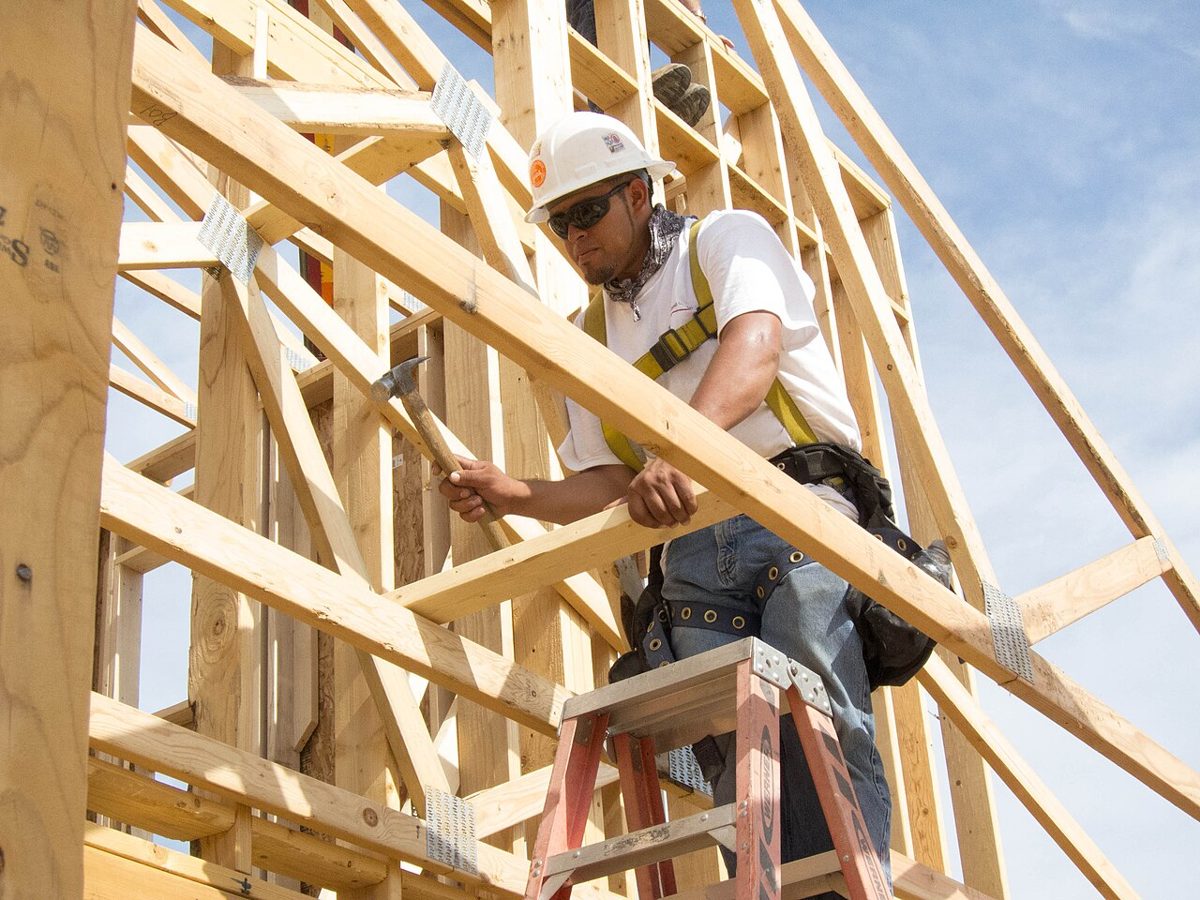
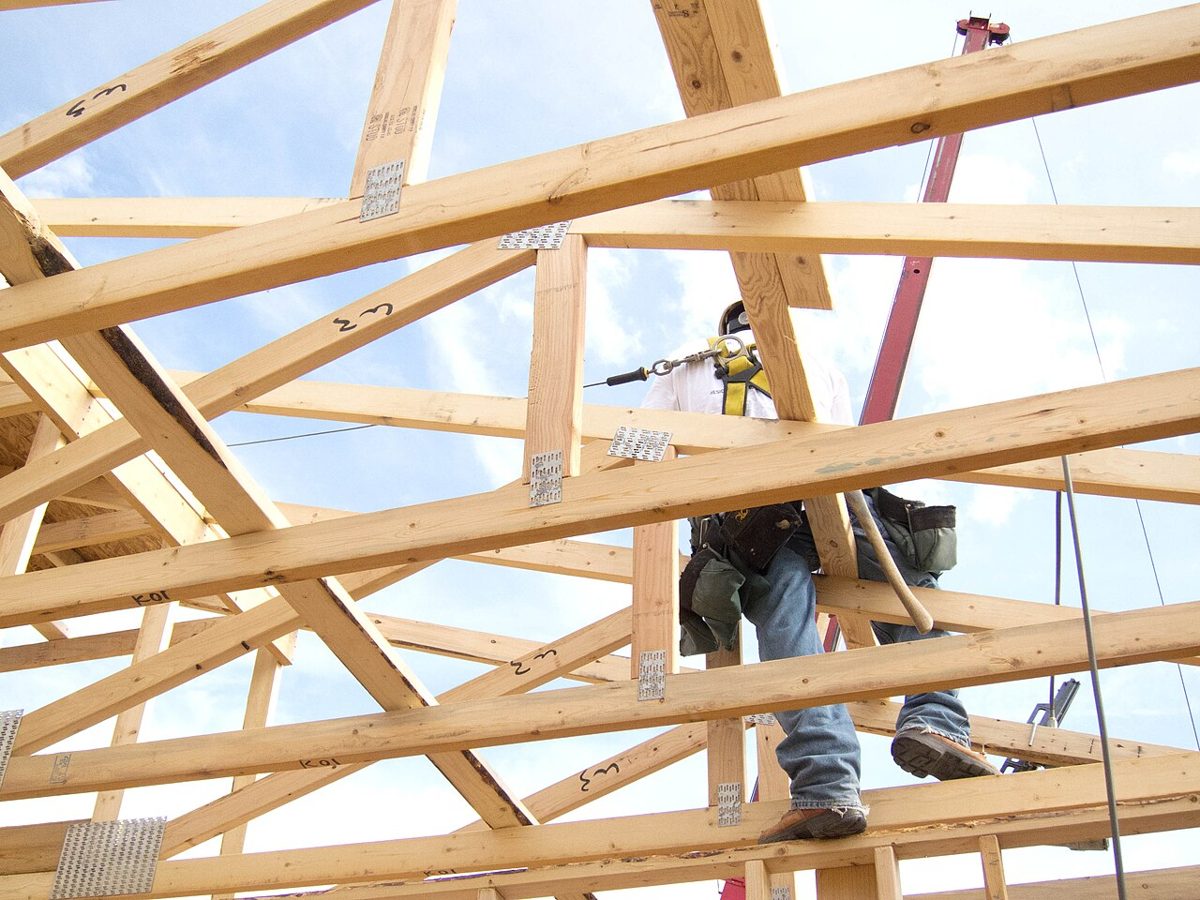
29 CFR 1926.501 generally requires fall protection when workers on a construction walking-working surface are exposed to an unprotected side or edge six feet or more above a lower level.
Depending on the work, that protection may include:
- A guardrail system
- A safety-net system
- A personal fall-arrest system
Leading edges, hoist areas, ramps, excavations, roofing work, and other hazards have additional requirements. None of those requirements disappear because the task is quick or someone promises to “be careful.”
A harness is necessary when personal fall arrest is the selected system. Simply wearing one, however, does not protect anyone. The worker must be connected to a suitable anchor with equipment that fits the task and the available fall clearance.
Prevent the Fall Before You Plan to Arrest It
Whenever the work allows it, use a system that keeps workers away from the fall hazard.
| System | Use it when |
|---|---|
| Guardrail | The work can be completed behind a physical barrier. Protection does not depend on each worker remembering to connect. |
| Safety net | Work is performed above an area where a properly installed net can catch a falling worker. |
| Fall restraint | The system can prevent the worker from reaching the unprotected edge. |
| Personal fall arrest | The worker must approach the edge and guardrails or restraint cannot safely accommodate the task. Anchorage, clearance, equipment compatibility, and rescue must all be planned. |
A system that prevents the fall is usually preferable to one that begins working only after the worker has gone over the edge.
A Harness Is Only One Part of the System
Roof work, steel erection, leading-edge decking, steep-slope work, and some aerial-lift tasks may require a personal fall-arrest system.
For that system to work:
- The harness must fit the worker.
- The lanyard or self-retracting lifeline must be suitable for the task.
- The available clearance must be calculated.
- The components must be compatible.
- The anchorage must be appropriate for the system.
- A prompt rescue must be possible.
Do not connect to a vent pipe, an ordinary 2×4, an unrated railing, or anything else simply because it is nearby.
Construction requirements for personal fall-arrest systems are addressed in 29 CFR 1926.502. The standard establishes limits for free fall, deceleration distance, and arresting force.
Before anyone connects, the competent person should be able to answer one critical question:
If the worker falls here, what will they hit before the system stops them?
If the answer is unclear, the system is not ready.
Check the Clearance Below the Worker
A worker can be properly connected and still strike the level below if the system does not have enough room to arrest the fall.
The clearance calculation may need to account for:
- Lanyard length
- Self-retracting lifeline performance
- Deceleration distance
- Harness stretch and D-ring movement
- Worker height
- Anchor position
- Swing-fall exposure
- A safety margin
Do not choose equipment solely because it says “fall protection” on the package. Match the system to the anchor location, fall distance, and clearance available at the actual work area.
Protect Every Hole and Skylight
A floor opening can be as dangerous as an unprotected roof edge. Skylights may also present fall hazards and should not be assumed to support a worker.
Depending on the condition and applicable requirements, protect the opening with an appropriate cover or guardrail system.
Covers must be capable of supporting the required loads, secured against accidental movement, and properly identified where required.
Workers often step where solid flooring existed the day before. Treat every new opening as an immediate hazard—not something to address after the next break.
A Short Drop Can Still Be Deadly
Six feet is a common construction threshold for unprotected sides and edges. It is not permission to ignore shorter falls.
Protection may still be required when workers are exposed to dangerous equipment, moving machinery, sharp objects, chemicals, or other hazards below the working surface.
A four-foot fall into an operating mixer is not safer because it falls below the usual six-foot construction threshold.
In General Industry, the Trigger Is Often Four Feet
For general-industry workplaces, 29 CFR 1910.28 generally requires fall protection at four feet above a lower level.
Do not apply the construction six-foot threshold automatically to:
- Plant platforms
- Warehouse mezzanines
- Maintenance areas
- Loading locations
- Other general-industry walking-working surfaces
Determine which standard governs the work before selecting the system or deciding that no protection is required.
Scaffolds and aerial lifts also have equipment- and activity-specific requirements. Employer procedures and manufacturer instructions may impose additional requirements for the equipment being used.
Do Not Treat a Warning Line Like a Guardrail
Warning lines and safety-monitoring systems are permitted only under specific conditions. They do not provide the physical protection of a guardrail.
A warning line does not arrest a fall. A safety monitor cannot protect workers effectively while performing another task that distracts from monitoring.
Use these methods only where the applicable standard allows them and every requirement for the system has been met.
Correct the Failures That Keep Appearing
Common fall-protection failures include:
- Workers approaching unprotected roof edges
- Harnesses remaining in the job box while work continues
- Lanyards connected to unrated or unsuitable objects
- Insufficient clearance below self-retracting lifelines
- Swing-fall hazards created by anchors positioned too far to one side
- Guardrail top rails removed temporarily and not replaced
- Floor openings and skylights left uncovered or unguarded
- Warning lines treated as physical barriers
- Safety monitors distracted by tools or other work
- No rescue plan for a worker suspended after a fall
Most of these failures are visible before anyone falls. Correct them before work continues.
Train Workers on the System They Will Actually Use
Fall-hazard training is required under 29 CFR 1926.503.
Workers need to understand:
- The fall hazards in their work area
- How the selected protection system works
- How to inspect and use the equipment
- Where they may connect
- How much clearance the system requires
- What creates a swing fall
- What to do when equipment is damaged
- How rescue will be handled
An OSHA 10 Construction course devotes significant attention to falls, but it does not replace training on the specific anchors, guardrails, lifelines, equipment, and procedures used at your site.
To train your crew in-house, see the fall protection train the trainer course.
See OSHA 10 Construction Training Read the Ladder-Safety Guide
Build the System Before Work Starts
Do not send a worker toward an open edge with a harness and a general warning.
Choose the system. Install the protection. Verify the anchor and clearance. Inspect the equipment. Plan the rescue. Train the worker.
At six feet, safety must be built into the job—not left to someone’s balance.