Lockout/tagout guide · 29 CFR 1910.147 · Plants and mills · Updated August 2026
Your Hands Are in the Machine. Make Sure Nobody Can Start It.
A disconnect turned off is not enough. Lock out every source of hazardous energy, control stored force, and verify the machine cannot move before work begins.
29 CFR 1910.147
One Worker. One Lock. One Key.
The person entering the danger zone applies their own lock and keeps exclusive control of the key until the work is complete and they are clear of the equipment.
Nobody should be able to restart that machine without that worker’s knowledge.
Under 29 CFR 1910.147, an authorized employee generally must:
- Shut down the equipment.
- Isolate every hazardous energy source.
- Dissipate, block, or restrain stored energy.
- Apply a personal lock and tag.
- Verify that the machine has reached a zero-energy state.
- Complete the work.
- Inspect the area, notify affected employees, and remove their lock before restoring energy.
An employer’s documented emergency-removal procedure applies when the authorized employee is unavailable to remove their own lock.
Find Every Energy Source—not Just the Main Disconnect
Turning off the electrical disconnect does not make a machine safe if pressure, gravity, heat, or mechanical force can still cause movement.
Hazardous energy may include:
- Electrical power
- Hydraulic pressure
- Pneumatic pressure
- Steam
- Chemical energy
- Compressed or extended springs
- Gravity acting on a raised ram, die, blade, or load
- Residual pressure trapped inside a line
Walk the equipment and identify every source that could start the machine, release pressure, move a component, or drop a suspended part.
Devices that isolate energy
- Circuit breakers
- Disconnect switches
- Line valves
- Blanks and blinds
- Physical blocks and pins
Controls that do not isolate energy
- Push-buttons
- Selector switches
- Touchscreens
- Software controls
- Emergency-stop buttons
A control may stop the machine, but it does not necessarily prevent someone or something from starting it again.
If an energy-isolating device can accept a lock, use a lock. Tag-only procedures are a limited alternative with additional requirements.
Follow the Sequence That Gets You to Zero Energy
1. Prepare
Identify the equipment, energy sources, isolation points, stored-energy hazards, and machine-specific procedure.
2. Notify
Tell affected employees that the equipment will be shut down and locked out.
3. Shut Down
Stop the machine using its normal shutdown procedure.
4. Isolate
Operate every breaker, disconnect, valve, blank, block, or other device needed to separate the machine from its energy sources.
5. Control Stored Energy
Bleed pressure, discharge capacitors, lower suspended parts, release spring tension, and install blocks, pins, or restraints where needed.
6. Apply Your Lock and Tag
Place your personal lock and identification tag on each isolating device or approved group-lockout device.
7. Verify Zero Energy
Do not assume the lock worked. Confirm it.
- Try the normal start control.
- Confirm pressure gauges have reached zero.
- Check that moving components are blocked or restrained.
- Test electrical circuits with the correct meter if you are qualified to perform that work.
- Return controls to the off or neutral position after testing.
8. Complete the Work
Begin servicing only after every energy source has been isolated and verification is complete.
9. Restore Energy Safely
Inspect the equipment, remove tools and temporary restraints, confirm workers are clear, notify affected employees, remove personal locks according to the procedure, and restore energy in the correct order.
On a Group Job, Keep Your Own Protection
A supervisor’s lock does not replace the personal protection of every authorized employee working in the danger zone.
Each authorized employee should apply a personal lock to the hasp, lockbox, or approved group-lockout device before beginning work. Each worker removes their own lock when their part of the job is finished and they are clear.
During a shift change:
The incoming worker applies their lock before the outgoing worker removes theirs.
A conversation, note, or verbal handoff does not physically prevent the machine from starting.
If a worker leaves unexpectedly, their lock remains in place unless the employer completes its documented lock-removal procedure, including making every reasonable effort to contact the worker.
Do You Have the Right Device for Every Isolator?
A lockout program fails when the procedure calls for equipment that workers cannot find—or that does not fit.
Before buying a kit, inventory the breakers, disconnects, plugs, valves, and unusual isolation points in your facility.
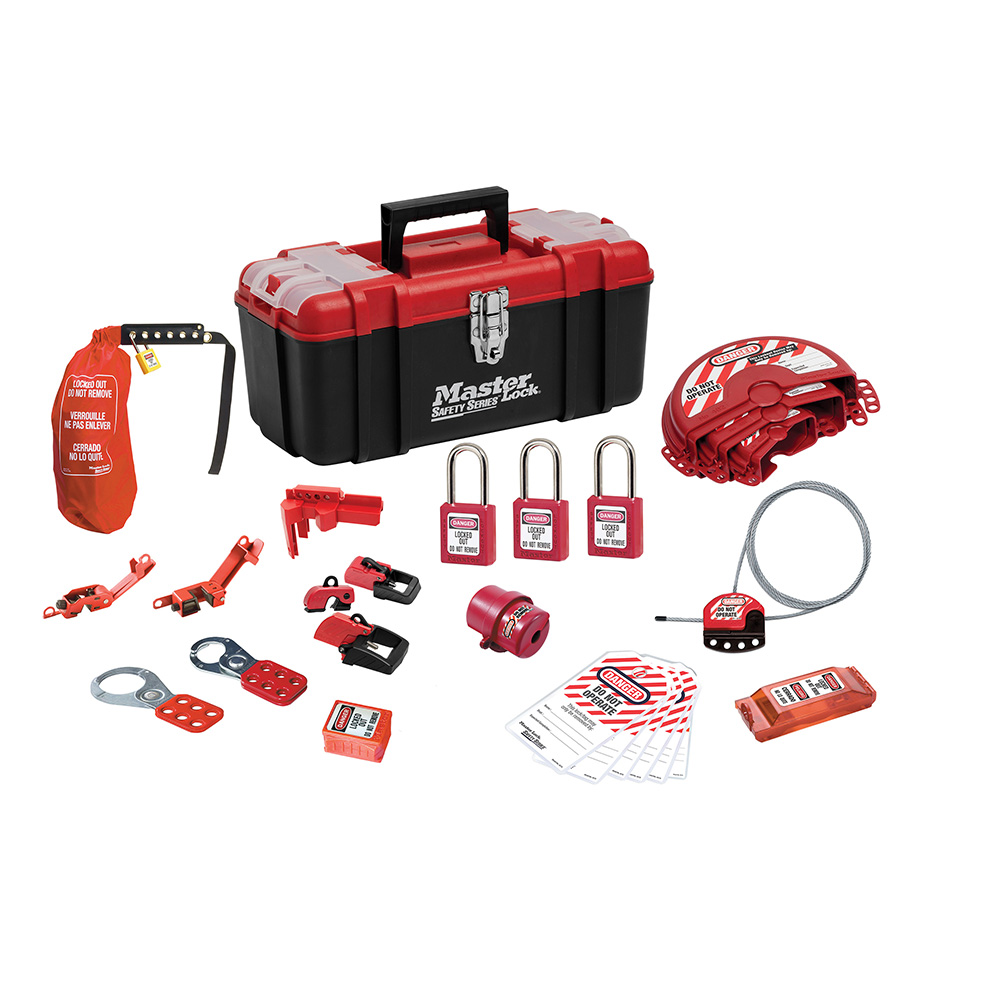
A practical personal lockout kit may include:
- Safety padlocks with keys that differ from other workers’ keys
- Lockout hasps for jobs involving multiple employees
- Durable identification and warning tags
- Breaker lockouts that fit the panels in your facility
- Ball-valve and gate-valve lockouts in the correct sizes
- Plug lockouts
- A cable lockout for unusual isolation points
- Approved blocks, pins, or cribbing for gravity hazards
Do not improvise gravity protection with scrap lumber or an object that was not designed to hold the load.
Choose devices made for lockout use. Inspect them regularly and replace cracked, damaged, or incomplete equipment.
Most importantly, keep the equipment close to the work. A perfect kit cannot protect anyone if it is locked in a truck two buildings away.
Carry Your Lockout Equipment in One Personal Toolbox
The Best Kit Is the One That Matches Your Plant
Do not buy a lockout kit based only on the number of pieces in the box.
Choose equipment based on:
- The brands and styles of breakers in your electrical panels
- The types and sizes of valves in your process
- The plugs, disconnects, and other isolation points you use
- The number of workers involved in group lockout
- The stored-energy and gravity hazards on your equipment
- The languages workers need on warning tags
Start with the isolators in your facility. Then choose the kit that can actually lock them.
Get the Personal Lockout Toolbox
Train Everyone Who Locks—or Works Near a Lock
Authorized employees need training on the hazardous energy they may encounter and the machine-specific procedures they must follow.
Affected employees need to understand:
- Why equipment has been locked out
- Why they must not try to restart it
- Why they must not bypass a lockout device
- Why they must never remove another worker’s lock
Retraining may be required when job assignments, equipment, hazards, or energy-control procedures change—or when inspections reveal that procedures are not being followed correctly.
An OSHA 10 General Industry course may introduce lockout/tagout as an elective topic. It does not replace the training required for the presses, robots, conveyors, and other equipment in your workplace.
See OSHA 10 General Industry Training
Do Not Trust “Off.” Verify Zero Energy.
The injury happens when someone believes the machine is safe but one source of energy remains.
Find every source. Isolate it. Control stored energy. Apply your lock. Verify the result.
Only then should anyone put their hands inside the machine.
Equip Your Personal Lockout Kit