Powered industrial trucks · 29 CFR 1910.178 · Updated August 2026
Finish Your Forklift Classroom Training Today
Complete the formal-instruction portion online in about three hours. Then demonstrate your skills and pass your employer’s workplace evaluation before operating independently.
About three hours · $59 · English or Spanish · Same-day PDF
Get the Classroom Requirement Done
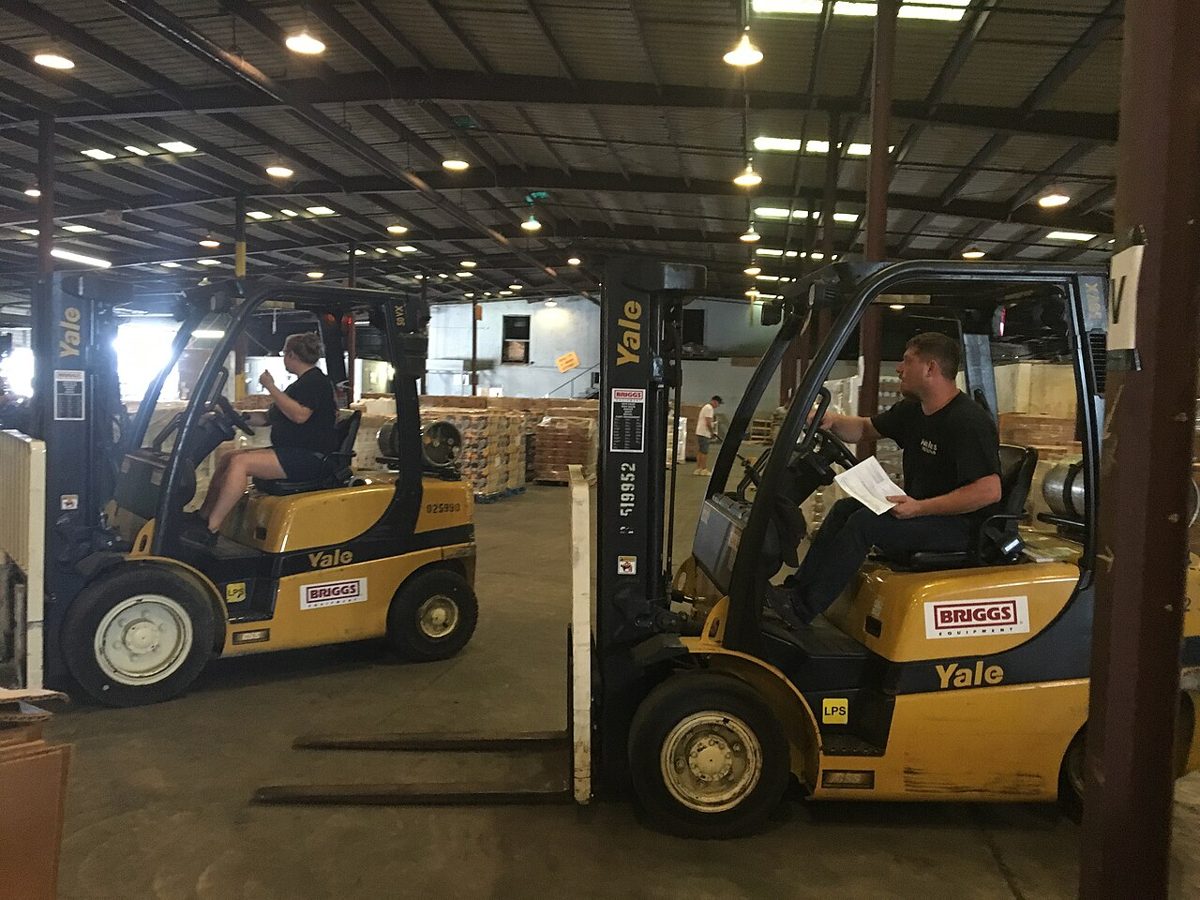
If you operate a sit-down forklift, reach truck, powered pallet jack, order picker, or another powered industrial truck, your employer must ensure that you are trained and competent before allowing you to operate it without supervision.
Online training gives you a convenient way to complete the formal-instruction portion of that process.
The course covers topics such as:
- Forklift stability
- Capacity and data plates
- Pre-operation inspections
- Operating controls
- Load handling
- Pedestrian hazards
- Workplace conditions
- Common causes of tip-overs and collisions
Complete the course in English or Spanish and receive a same-day PDF documenting the formal instruction.
What You Need Before You Can Operate a Forklift
29 CFR 1910.178 requires more than passing an online quiz. Operator training has three parts:
| Step | What it covers |
|---|---|
| 1. Formal instruction | Classroom teaching, discussion, video, written material, or interactive online learning |
| 2. Practical training | A qualified trainer demonstrates safe operation and the trainee practices using the equipment |
| 3. Workplace evaluation | A qualified evaluator observes the operator using the truck in the actual workplace |
The online course covers the first step.
Your employer must arrange the practical training and evaluate your performance on the type of truck you will operate and under the conditions where you will work.
You are not ready to operate independently simply because a website generated a certificate.
Finish the class. Practice on the equipment. Pass the workplace evaluation.
There Is No Federal Forklift License
OSHA does not mail forklift operators a federal license or Department of Labor card.
The employer is responsible for certifying that each operator has been trained and evaluated as required by 29 CFR 1910.178.
Your training record should include:
- The operator’s name
- The training date
- The evaluation date
- The identity of the person who provided the training or evaluation
The PDF from an online course documents formal instruction. It does not replace the employer’s final certification or workplace evaluation.
That distinction protects both the worker and the employer from relying on incomplete training.
Train on the Truck You Will Actually Drive
Powered industrial trucks do not all handle the same way.
The standard covers equipment used to carry, push, pull, lift, stack, or tier materials, including many:
- Sit-down counterbalance forklifts
- Stand-up reach trucks
- Order pickers
- Powered pallet jacks
- Other specialized powered industrial trucks
Training on one type of truck does not automatically prepare you to operate every other type.
Different trucks may have different:
- Steering characteristics
- Operating controls
- Visibility limitations
- Stability profiles
- Capacity limits
- Attachments
- Load-handling procedures
A worker trained on a sit-down counterbalance forklift may still need additional training and evaluation before operating a reach truck or order picker.
The workplace matters too. Training should address the aisles, ramps, loading docks, trailers, racks, surfaces, loads, and pedestrian traffic the operator will encounter.
Why Start With Online Training?
Online formal instruction allows a worker to complete the classroom topics without waiting for a scheduled group session.
The course provides:
- Approximately three hours of formal instruction
- English and Spanish options
- Coverage for sit-down, reach, pallet jack, and similar powered industrial trucks
- A same-day PDF after successful completion
- Flexible online access
Your employer still provides:
- Equipment-specific instruction
- Hands-on demonstration
- Supervised practice
- Training on workplace hazards
- The final performance evaluation
- Employer certification
Online training handles the knowledge portion efficiently so the employer can focus on the equipment and conditions at the actual job site.
Learn Why a Forklift Is Not a Car
A forklift may look easy to operate, but its steering, balance, visibility, and load behavior are different from a passenger vehicle.
Formal instruction helps operators understand:
- Why rear-wheel steering changes the turning path
- How the stability triangle affects tip-over risk
- Why raised loads reduce stability
- How load centers affect capacity
- Why the data plate matters
- How attachments may change the truck’s rated capacity
- Why grades, docks, and trailers require special care
- How blind corners and limited visibility endanger pedestrians
- Why passengers should not ride unless the truck is designed for them
The goal is not merely to pass a test. It is to understand the risks before practicing on the truck.
When Refresher Training Is Required
Refresher training may be required when:
- The operator is observed using the truck unsafely
- The operator is involved in an accident or near-miss
- An evaluation reveals unsafe operation
- The operator is assigned a different type of truck
- Workplace conditions change in a way that affects safe operation
Relevant workplace changes may include:
- A new rack layout
- Different trailers or loading areas
- New attachments
- New types of loads
- Changed pedestrian routes
- Different operating surfaces
In addition, the employer must evaluate each operator’s performance at least once every three years.
To run those evaluations in-house, see forklift train the trainer certification.
Do not wait for an accident to discover that an operator’s training no longer matches the truck or workplace.
What to Expect After the Online Course
1. Complete the formal instruction
Work through the online lessons and successfully finish the course requirements.
2. Download your PDF
Keep the document as evidence that you completed the formal-instruction portion.
3. Give the record to your employer
Your employer can use it as one part of the required operator-training documentation.
4. Complete hands-on practice
A person with the necessary knowledge, training, and experience demonstrates the equipment and supervises your practice.
5. Pass the workplace evaluation
A qualified evaluator observes you operating the truck under actual or representative workplace conditions.
6. Receive employer certification
Your employer documents that the required training and evaluation have been completed.
Start the Classroom Portion Today
You do not need to wait for a group class to begin learning the operating principles required for powered industrial trucks.
Complete the formal instruction online in approximately three hours, download your PDF, and take the next step toward your employer’s hands-on training and evaluation.
Know What You Are Buying
This course covers formal instruction under the forklift operator-training process.
It is not:
- A federal forklift license
- An OSHA-issued certification
- A Department of Labor card
- Hands-on training
- A workplace performance evaluation
- Permission to operate a truck without your employer’s approval
Use the course to complete the classroom portion. Then train and demonstrate safe operation on the truck you will actually use.
Finish the knowledge training today. Complete the practical evaluation at work. Operate only after your employer confirms you are ready.
Related guides: OSHA 10 General Industry · Lockout/Tagout