Blog · Lockout/tagout · 29 CFR 1910.147
Lockout Tagout: The Machine Is Not Safe Yet
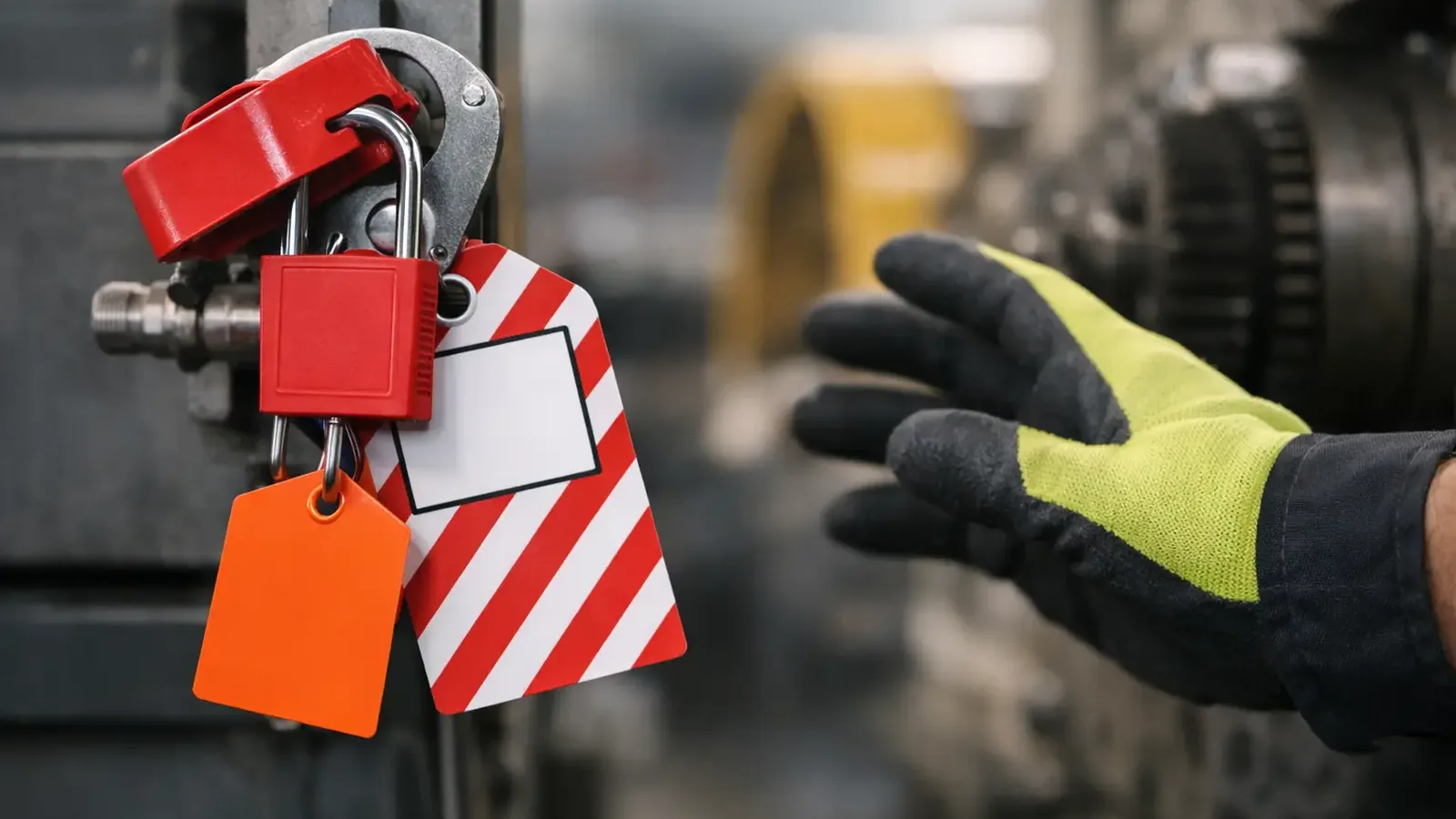
A conveyor jams, a press needs a die change, or a pump quits halfway through a shift. Someone says, “Just hit stop. I’ll be in and out.” That is where people get hurt. A stop button stops a machine’s operation. It does not control the energy that can restart it, drop it, spin it, crush it, or release under pressure. Lockout tagout is the process that makes servicing work safe by isolating hazardous energy and proving that isolation worked.
Production pressure is real. So are amputations, electrocutions, and fatal crush injuries. “I thought it was locked out” is not a defense against a machine that starts with someone inside its danger zone.
What Lockout Tagout Is Supposed to Prevent
Under OSHA’s general-industry control of hazardous energy standard, 29 CFR 1910.147, employers must establish an energy-control program for covered servicing and maintenance work. The point is simple: before a worker repairs, clears, adjusts, cleans, or services equipment where unexpected energization or stored energy could cause injury, that energy must be controlled.
Hazardous energy is more than electricity. A machine may have electrical, hydraulic, pneumatic, mechanical, chemical, thermal, gravity, or spring energy - often several at once. Turning off the disconnect may remove electrical power while leaving a raised platen suspended by hydraulic pressure. Closing an air valve may leave trapped air in a cylinder. A flywheel can keep turning after the motor stops. A hot line can still burn someone after the pump is shut down.
That is why “off” is not the same as safe. The job is not safe until every relevant energy source is isolated, stored energy is addressed, and the worker verifies a zero-energy state.
The Lockout Tagout Sequence That Holds Up in Real Work
A written procedure should identify the equipment, its energy sources, isolation points, shutdown steps, stored-energy controls, verification method, and restoration steps. Workers should not have to invent the procedure while standing beside a broken machine.
The basic sequence is straightforward, but every step matters:
- Prepare for the shutdown. Identify every energy source and the exact disconnects, valves, blocks, blanks, or other isolation devices involved. Do not assume the nearest disconnect controls the whole machine.
- Notify affected employees. Tell operators and nearby workers that the equipment is being shut down, why, and who is doing the work. A person who does not know maintenance is underway may try to restart production.
- Shut down the equipment normally. Use the normal stop procedure first, then isolate each energy source using an energy-isolating device.
- Apply personal locks and tags. The authorized employee doing the work applies their lock. A lock should identify its owner, and the key stays under that worker’s control.
- Release, restrain, or otherwise make stored energy safe. Bleed pressure, discharge capacitors, block elevated parts, secure moving components, allow hot materials to cool, or take the specific action the procedure requires.
- Verify isolation before work begins. With personnel clear and controls placed in a safe position, try the normal start control or use the required test method. Then return controls to neutral or off. For electrical work, verification may require proper testing by a qualified person, not just pushing a button and hoping.
The verification step is where the shortcut usually shows up. A lock on a disconnect is not proof that the right disconnect was locked. The attempt to start, test, or otherwise verify is the proof.
Stored Energy Is Where Good Intentions Fail
Stored energy deserves its own pause because it causes injuries after workers believe the hard part is over. A raised load can fall when a valve leaks. A compressed spring can release when a guard comes off. Hydraulic pressure can hold a ram in position until a fitting is loosened. Gravity does not care that the electrical disconnect is locked.
Use blocks, pins, restraints, bleed-down steps, grounding, cooling time, or other controls that match the hazard. If energy can reaccumulate during the job, the worker must monitor it and keep it controlled. One bleed valve cracked at the beginning of the shift is not enough if pressure can build again.
Who Can Lock Out Equipment?
OSHA distinguishes between authorized employees and affected employees. An authorized employee performs the lockout or tagout and services the machine. An affected employee operates the equipment or works in the area and is affected by the shutdown. They need to understand the purpose of the control and the rule that they must not restart or use locked-out equipment.
That distinction does not mean only maintenance workers face danger. Operators are often the ones clearing jams, changing tooling, cleaning buildup, or making adjustments. If that task exposes them to hazardous energy, the employer must determine whether lockout tagout applies and train them accordingly.
A normal production operation is not automatically lockout work. Some minor servicing tasks performed during normal production may use alternative protective measures, but only when those measures provide effective protection. This is not permission to rely on a stop button, an interlocked guard someone can defeat, or a coworker standing at the controls. The alternative must actually prevent exposure to the hazard.
There are limited exceptions, including certain cord-and-plug equipment where the plug is disconnected and remains under the exclusive control of the employee performing the service. “It’s nearby” is not exclusive control. If someone else can plug it back in, the protection is not there.
Locks, Tags, and the Difference Between Them
A lock physically holds an energy-isolating device in a safe position. A tag communicates a warning, but it does not physically restrain the device. That is why lockout is generally the stronger control.
If tagout is used instead of lockout, OSHA requires additional measures that provide protection equivalent to a lock. The exact measures depend on the equipment and procedure. A tag alone on a disconnect handle is not a magic shield. Workers must also understand that tags are never to be ignored, bypassed, or removed without authorization.
Each worker exposed to the work needs personal protection. In group lockout, a supervisor’s single lock does not replace every worker’s personal lock. A group lock box or comparable procedure can work when each authorized employee applies their own lock before starting work and removes it only after they are clear.
Shift changes and contractor work require the same discipline. Incoming workers must apply their protection before outgoing workers remove theirs. When outside contractors and host employees work on the same equipment, both employers need to understand and coordinate their energy-control procedures. A handoff based on “Joe said it was good” is not a procedure.
Employer Duties Training Cards Do Not Replace
A course completion card can introduce the rules. It cannot identify the energy sources on your particular baler, mixer, saw, press, or conveyor. It cannot show that a worker can follow the site procedure, recognize isolation points, or verify a safe condition.
The employer is responsible for the written energy-control program, equipment-specific procedures where required, employee training, and periodic inspections. OSHA requires periodic inspection of each energy-control procedure at least annually. That inspection should catch drift: missing labels, changed equipment, workers using the wrong valve, or a team treating a tag like a lock.
Training also has to match the employee’s role. Authorized employees need detailed instruction on recognizing hazardous energy, the type and magnitude of energy present, and the methods used to isolate and control it. Affected employees need to know the purpose and use of the program. Other employees working nearby need to understand that locked or tagged equipment is off limits.
When equipment changes, procedures change, jobs change, or an inspection shows a worker does not understand the process, retraining is needed. A wallet card does not close that gap. Neither does a compliance binder collecting dust in an office.
When It Is Time to Put the Lock On
If a task requires a worker to reach into a point of operation, enter a machine’s danger zone, remove a guard, clear a jam, work under a raised component, or contact parts that could move or energize, stop and ask the hard question: what energy could hurt this person?
Then control that energy before the work starts. Do not accept “the machine has been acting up all day” as a reason to rush. A few minutes spent finding the correct disconnect, bleeding the line, and verifying zero energy is cheaper than an ambulance, an amputation, or a call home no employer wants to make.
The machine can wait. The worker standing in its path cannot afford a guess.