Blog · Fall protection · 29 CFR 1926.501 · 1910.28
Know When Fall Protection Is Required at Six Feet
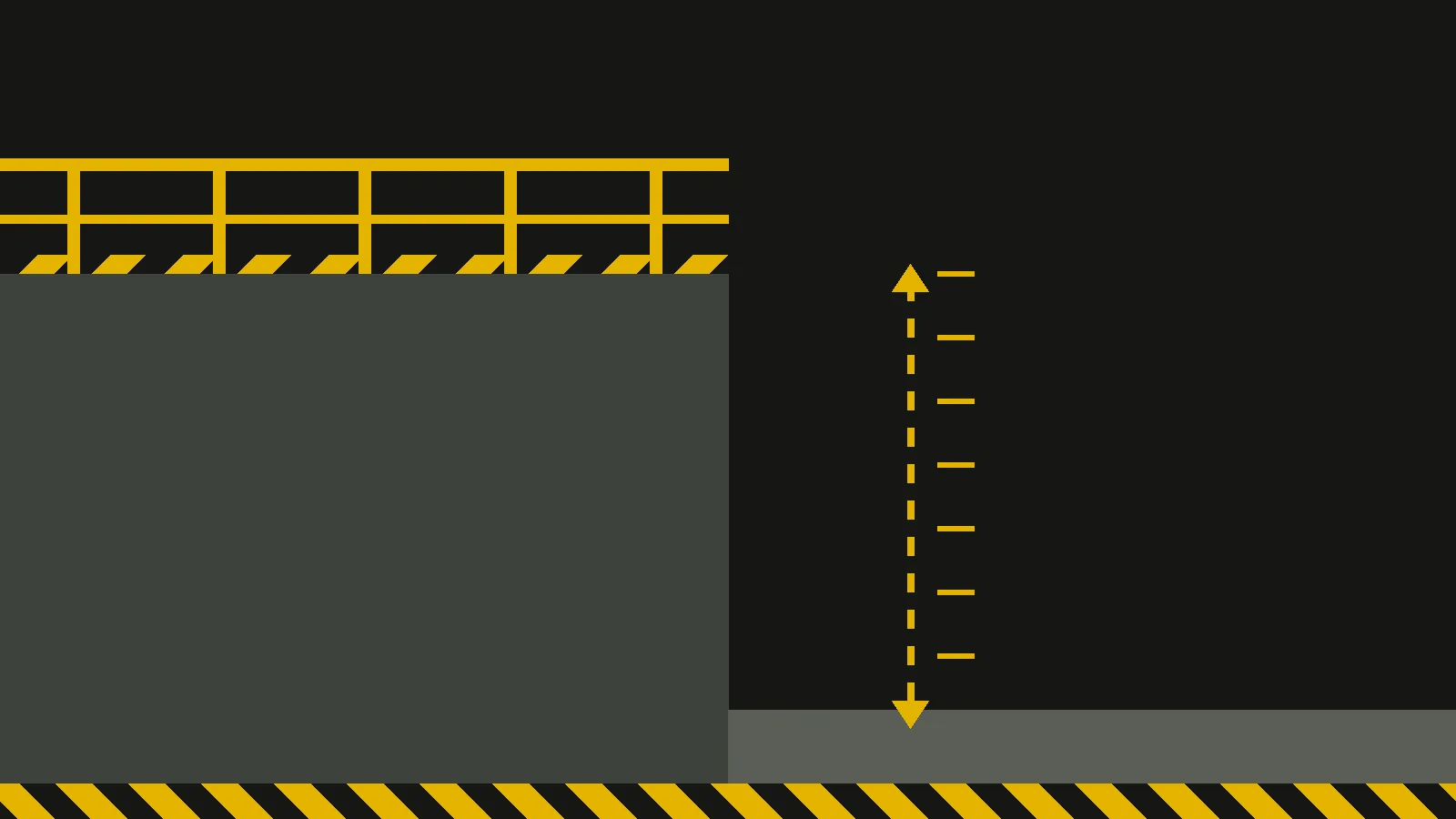
Is fall protection required at six feet? In construction, generally yes: 29 CFR 1926.501(b)(1) requires fall protection for employees on a walking-working surface with an unprotected side or edge 6 feet or more above a lower level. Where a personal fall arrest system is the control, match the lifeline to your anchor and the clearance below.
For much construction work, OSHA’s answer is clear. At 6 feet or more above a lower level, workers exposed to an unprotected side or edge generally need fall protection. But “six feet” is not a universal rule for every workplace, every surface, and every task. General industry has a different trigger, and some construction activities use task-specific rules.
Protect construction workers at 6 feet and higher.
Usually, yes. Under OSHA construction standard 29 CFR 1926.501, employees on a walking-working surface with an unprotected side or edge 6 feet or more above a lower level must be protected from falling by guardrail systems, safety net systems, or personal fall arrest systems, unless a specific provision applies to that work.
That covers familiar jobsite exposures: open-sided floors, roof edges, leading edges, floor holes, wall openings, ramps, runways, and excavations in certain conditions. The lower level can be the ground, a concrete floor, a lower roof, equipment, or anything below that a worker can strike.
Six feet is not a “permission to work without protection until the tape measure says otherwise.” A fall from less than 6 feet can still break a wrist, crush a heel, or put someone headfirst onto rebar, pipe, machinery, or scrap. OSHA’s construction threshold tells the employer when a particular fall-protection rule generally applies. It does not turn lower falls into acceptable risks.
Remove the exposure before you rely on a harness.
A properly built guardrail keeps a worker away from the edge without relying on a hook, a connection point, or a perfect decision made under pressure. It is often the cleanest answer for open decks, mezzanine-style work platforms, and roof perimeters.
Personal fall arrest can be the right choice when guardrails are not feasible, but it brings more moving parts. The harness must fit. The lanyard or self-retracting lifeline must be compatible with the anchor. The anchor must be adequate. The worker needs enough clearance below to avoid striking the lower level during arrest. And there must be a rescue plan.
A harness protects no one while it hangs in a vehicle, and it is no rescue plan when nobody on site knows how to bring a suspended worker down. Tie off overhead where you can, using a self-retracting lifeline rated for the anchor position.
Apply the 4-foot trigger in general industry.
Warehouse, plant, and maintenance teams should not carry the construction number into every work area. Under OSHA’s general industry walking-working surface rules, fall protection is generally required when a worker is 4 feet or more above a lower level. The governing rules are found in 29 CFR 1910 Subpart D.
That means an employee working on an unprotected 4-foot loading dock edge, elevated platform, or open-sided work surface may need protection even though the drop is below 6 feet. In a manufacturing plant, “we thought the rule was six feet” is not a defense after someone goes over an edge.
The work classification matters. Construction standards generally apply to construction activity, while general industry standards generally apply to ongoing operations in plants, warehouses, and similar workplaces. Maintenance work can be harder to sort out, especially when it overlaps with renovation, replacement, or new installation. The employer needs to identify the applicable standard before the task starts, not after an incident.
If the task is unusual or the boundary is unclear, treat that as a reason to get competent safety guidance. It is not a reason to choose the less protective interpretation because the schedule is tight.
Get roofs, leading edges, holes, ladders, and lifts right
The six-foot rule gets repeated so often that people miss the exposure in front of them.
Roof work: On many construction roofs, workers at unprotected edges 6 feet or more above lower levels need conventional fall protection. Low-slope roofing has limited alternatives in defined situations, such as a warning-line system used with other required controls. A warning line is not a casual rope tossed near the edge. It has setup requirements, and the work plan must match the applicable rule.
Leading-edge work: Installing decking, sheathing, or framing near an advancing edge creates changing hazards. The edge moves. Anchor options may be limited. Material handling crowds the work area. That does not make protection optional. It means the employer must plan the sequence, access, anchorage, and protection method before the team is exposed.
Floor holes and openings: A hole does not need to be six feet deep to cause a bad injury. In construction, holes generally must be covered or protected by guardrails. Covers must support expected loads, be secured against displacement, and be marked so nobody mistakes them for ordinary flooring. A loose sheet of plywood is not automatically a compliant cover.
Ladders: A portable ladder is not handled exactly like an open roof edge. Workers normally are not expected to tie off merely because they are on a properly selected and used portable ladder. But that does not make ladder work casual. The ladder must be the right type and length, set on a stable surface, positioned correctly, and used without overreaching. If the work requires two hands, heavy force, side loading, or repeated movement at height, a ladder may be the wrong tool. Use a scaffold, aerial lift, or platform when it gives the worker a safer working position.
Aerial lifts and boom-supported platforms: When the manufacturer requires a personal fall arrest or restraint system, wear it and connect it to the designated anchor point. Do not tie off to a nearby steel column, pipe rack, or forklift rack unless the system and manufacturer instructions specifically allow it. The basket guardrail is not an excuse to ignore equipment rules.
Complete the system with anchor, clearance, and rescue
Teams sometimes talk about fall protection as if buying harnesses completed the job. A personal fall arrest system only works when its pieces work together.
The employer must provide a suitable system, select proper anchorages, inspect equipment, train workers, and ensure the system is used correctly. Workers must inspect harnesses, lanyards, connectors, and lifelines before use and remove damaged equipment from service. A cut web strap, bent gate, missing label, or deployed shock pack is not “probably fine for today.”
Clearance is where rushed planning becomes dangerous. A worker can fall farther than the length of the lanyard because the shock absorber deploys, the harness stretches, the D-ring shifts, and the worker’s body extends below the connection point. If there is a lower roof, equipment, or concrete slab beneath the work area, the team needs to calculate whether the system actually stops the worker before impact.
Then comes rescue. Suspension after a fall can quickly become a medical emergency. Calling 911 may be necessary, but it is not a complete rescue procedure. Who can reach the worker? What equipment is available? Can the worker be lowered or raised? Has the team practiced the plan? Put those answers in the pre-job plan.
Train workers on the hazards they face
OSHA requires training for workers exposed to fall hazards. The trainer must be qualified, and the training must cover the hazards workers may face and the procedures used to minimize them. That includes how to inspect, don, adjust, connect, and use personal fall arrest equipment where applicable.
A wallet card or online completion certificate may show that someone completed a course. It does not prove that the employer trained that person on the site’s roof layout, anchor points, rescue method, lift equipment, floor openings, or changing work conditions. OSHA 10 training can build awareness, but it does not replace employer-provided, task-specific fall-protection training.
Supervisors should also watch for the shortcuts that show up after the morning briefing: a worker unhooks to move around an obstruction, a lanyard gets clipped to something not designed as an anchor, a cover gets moved and not replaced, or a team starts work before the guardrail team arrives.
Choose the control before anyone climbs.
Before anyone goes up, the supervisor should be able to answer a few plain questions: What is the fall exposure? Which OSHA standard applies? Can we eliminate the edge with a guardrail or cover? If personal fall arrest is needed, where are the approved anchors, what is the clearance, and how will rescue happen?
If those questions have no clear answers, hold the work until they do.