Blog · OSHA training
OSHA 10 Construction vs General Industry
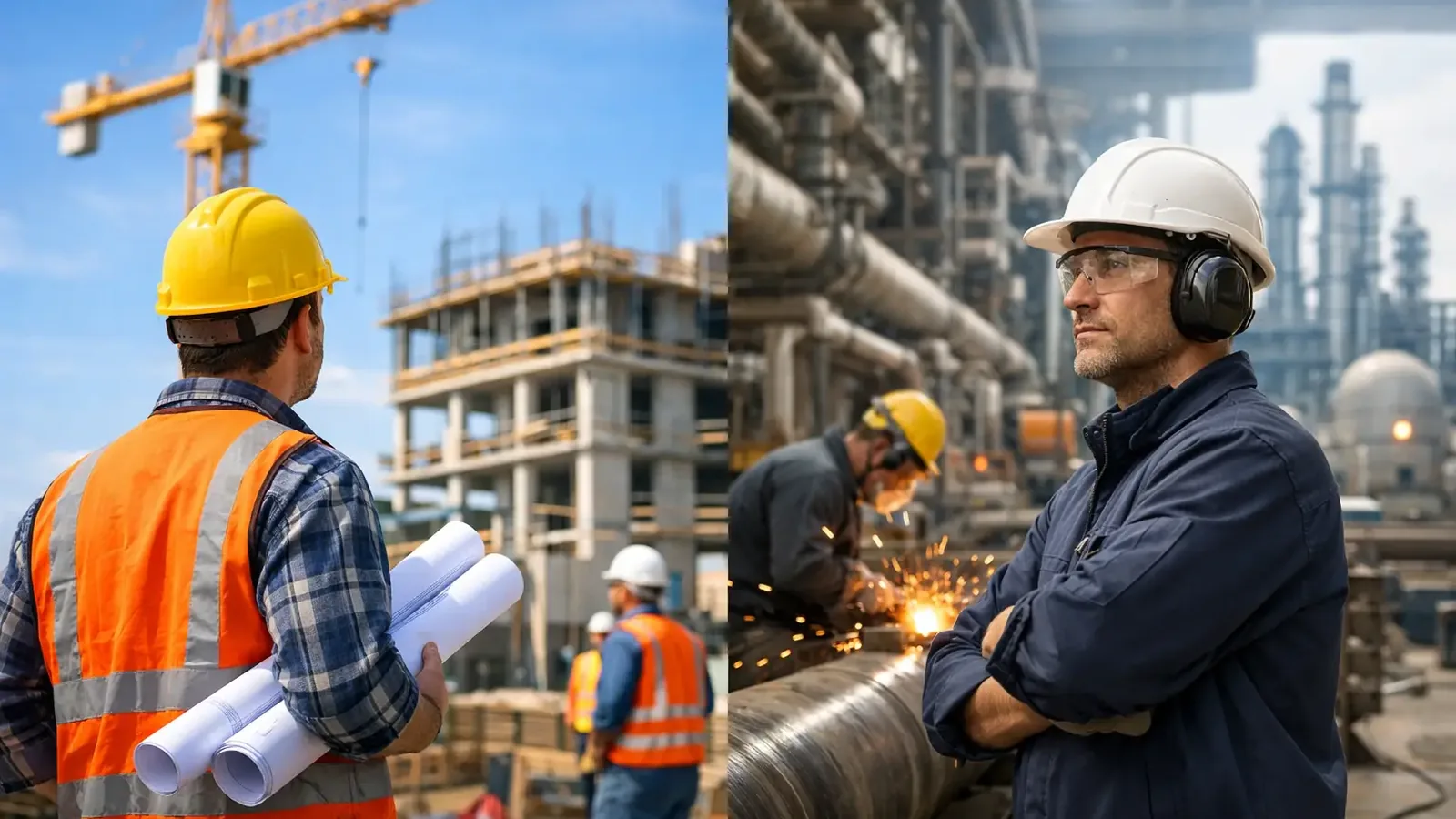
The wrong OSHA 10 card can create a problem before the first shift starts. A new hire may have completed OSHA 10 construction vs general industry training, show up with a wallet card, and still be unprepared for the hazards in front of them. A construction card does not teach someone how your warehouse traffic moves. A general industry card does not automatically prepare someone for steel erection, trench work, or an open-sided floor six stories up.
The right course is based on the work being performed, not the logo on the gate, the company name, or whichever class was cheaper. OSHA 10 is useful hazard-awareness training. It is not a substitute for the task training, equipment evaluation, supervision, and site-specific rules that keep people from getting hurt.
What OSHA 10 Is - and What It Is Not
OSHA 10 is part of OSHA's Outreach Training Program. It provides an entry-level introduction to common workplace hazards, worker rights, employer responsibilities, and the purpose of OSHA standards. After completing an authorized course, the student receives an OSHA 10 completion card.
That card can matter. Some owners, general contractors, employers, and local jurisdictions require it before a worker can enter a site or start a job. But OSHA does not have a blanket federal rule requiring every worker to carry an OSHA 10 card. A jobsite requirement and an OSHA regulation are not the same thing.
More importantly, the card is not a license, certification, or proof that a worker is qualified for every job. It does not authorize a person to operate a forklift, run a scissor lift, enter a permit-required confined space, work on energized equipment, or serve as a competent person for fall protection. If somebody says, “He has OSHA 10, so put him on it,” stop there. That is not how qualification works.
OSHA 10 Construction vs General Industry: The Core Difference
The two courses are built around different OSHA standards and different work environments.
OSHA 10 Construction focuses primarily on construction standards found in 29 CFR Part 1926. It is meant for workers involved in construction, alteration, repair, demolition, and similar field work. Its hazard emphasis reflects the reality of active jobsites: changing conditions, temporary power, multiple trades, open edges, excavation, material handling, and work occurring above and below other trades.
OSHA 10 General Industry focuses primarily on standards in 29 CFR Part 1910. It fits factories, warehouses, distribution centers, fabrication facilities, maintenance departments, and many other fixed workplaces. The course commonly spends more time on hazards such as machine guarding, hazardous chemicals, forklift traffic, walking-working surfaces, emergency action plans, and industrial housekeeping.
There is overlap because hazards overlap. Electricity does not care whether you work under Part 1910 or Part 1926. Neither does a blocked exit, a damaged extension cord, an unguarded machine, or a ladder set on a pallet because someone wanted to save two minutes.
Still, the emphasis is different. Construction training deals heavily with hazards that move with the job. General industry training is more likely to address hazards built into a facility's daily operation. Choose the course that matches the work the employee will actually perform most often.
Construction OSHA 10: Built for changing jobsites
Construction workers may encounter a different set of hazards every morning. Yesterday's safe access route may be blocked today. A floor opening may appear after another trade removes decking. Temporary electrical systems, mobile equipment, scaffolds, ladders, trenches, and suspended loads can all be part of one shift.
Construction OSHA 10 puts strong attention on OSHA's Focus Four hazards: falls, struck-by hazards, caught-in or between hazards, and electrocution. That makes sense. These are the hazards that routinely turn a normal shift into a life-changing injury or fatality.
Fall protection is a clear example. In much construction work, OSHA's familiar trigger is six feet. If a worker is exposed to a fall of six feet or more, the employer generally must provide fall protection, although the specific rule depends on the activity. A harness sitting in the truck is not fall protection. Neither is a harness clipped to an anchor point that cannot support the load or creates a swing-fall problem.
Construction OSHA 10 also commonly addresses scaffolds, excavation, cranes and rigging awareness, concrete and masonry work, hand and power tools, and temporary electrical hazards. It helps a worker recognize danger. It does not make that worker a qualified rigger, crane operator, competent person, or electrical worker.
General Industry OSHA 10: Built for fixed operations
General industry OSHA 10 is usually the better fit for workers whose job centers on a plant, warehouse, or other established facility. The workplace may be familiar, but familiar hazards can do serious damage when people get comfortable around them.
A warehouse worker may face forklift-pedestrian conflicts, dock-edge falls, stacked loads, conveyor pinch points, battery charging, and blocked aisles. A maintenance worker may encounter hazardous energy, chemical exposure, rotating equipment, confined spaces, and electrical panels. A machine operator may be one missing guard or one defeated interlock away from an amputation.
The course commonly covers walking-working surfaces, emergency exits and fire protection, electrical safety, personal protective equipment, hazard communication, materials handling, and machine-related hazards. It is practical awareness training for industrial work, not a replacement for the written programs and hands-on instruction an employer must provide.
For example, OSHA 10 does not qualify someone to operate a forklift. Forklift operators need employer training, a practical evaluation, and refresher training when required. Watching a course and receiving a card does not prove a worker can inspect the truck, judge load stability, navigate a crowded dock, or avoid striking a pedestrian at a blind corner.
How to Choose the Right OSHA 10 Course
Start with the employee's actual work, not the industry label used in casual conversation.
A laborer working on a new commercial building, road construction, residential framing project, demolition job, or utility installation will usually need OSHA 10 Construction. A worker assigned to a warehouse, manufacturing line, fabrication facility, or distribution facility will usually need OSHA 10 General Industry.
The harder cases involve contractors. A maintenance contractor may work inside a manufacturing plant, but if the contractor is performing construction activity such as renovation, installation, or major alteration, construction standards may apply to that work. A worker can be inside a plant and still be doing construction work. The address does not decide the standard by itself.
When the job crosses categories, ask the direct question: what work will this person do when conditions change and the supervisor is not standing beside them? If the worker will move between construction projects and facility work, they may need both courses over time. That does not mean one card replaces the other. It means the employer needs to match training and protection to the assignment.
Owners and general contractors may also set contractual requirements. If the bid documents require OSHA 10 Construction, sending a worker with a General Industry card can delay access even if that worker has years of experience. Verify the project requirement before enrollment, not at the gate at 5:45 a.m.
The Training OSHA 10 Cannot Replace
An OSHA 10 card is a starting point. The employer still owns the responsibility to train workers for the hazards, equipment, and procedures of the job.
That includes site orientation, emergency procedures, hazard communication, required PPE, equipment-specific instruction, and supervision. It also includes training that must be more than classroom awareness. A worker who will use a ladder needs to know the ladder's condition, duty rating, setup, securement, access point, and the 4-to-1 angle for a non-self-supporting ladder. “Don't fall” is not training.
The same line applies to hazardous energy. A general industry OSHA 10 course may introduce lockout/tagout, but it does not authorize an employee to isolate a machine. Authorized employees need employer-specific instruction on the equipment, energy sources, isolation points, lock application, verification, and group lockout procedure. “I thought it was locked out” is what people say after a shortcut has already gone bad.
Supervisors need to resist using the outreach card as a paperwork finish line. Check whether the worker can identify the hazard, follow the procedure, and stop work when the condition changes. If the answer is no, more training and control are needed before the task starts.
A Card Should Point to Safer Work
Choose OSHA 10 Construction when the work is construction. Choose General Industry when the work is industrial operations. Then do the part that actually protects people: train for the equipment, the site, the task, and the conditions that exist today.
A worker may carry a valid card for years. The real test happens when the load shifts, the machine jams, the ladder is too short, or production is pushing hard. That is the moment to use the training, call out the hazard, and refuse the shortcut.