Blog · Fall protection · 29 CFR 1910.140 · 1926.502
Inspect a Safety Harness Before Every Use and Catch Damage Early
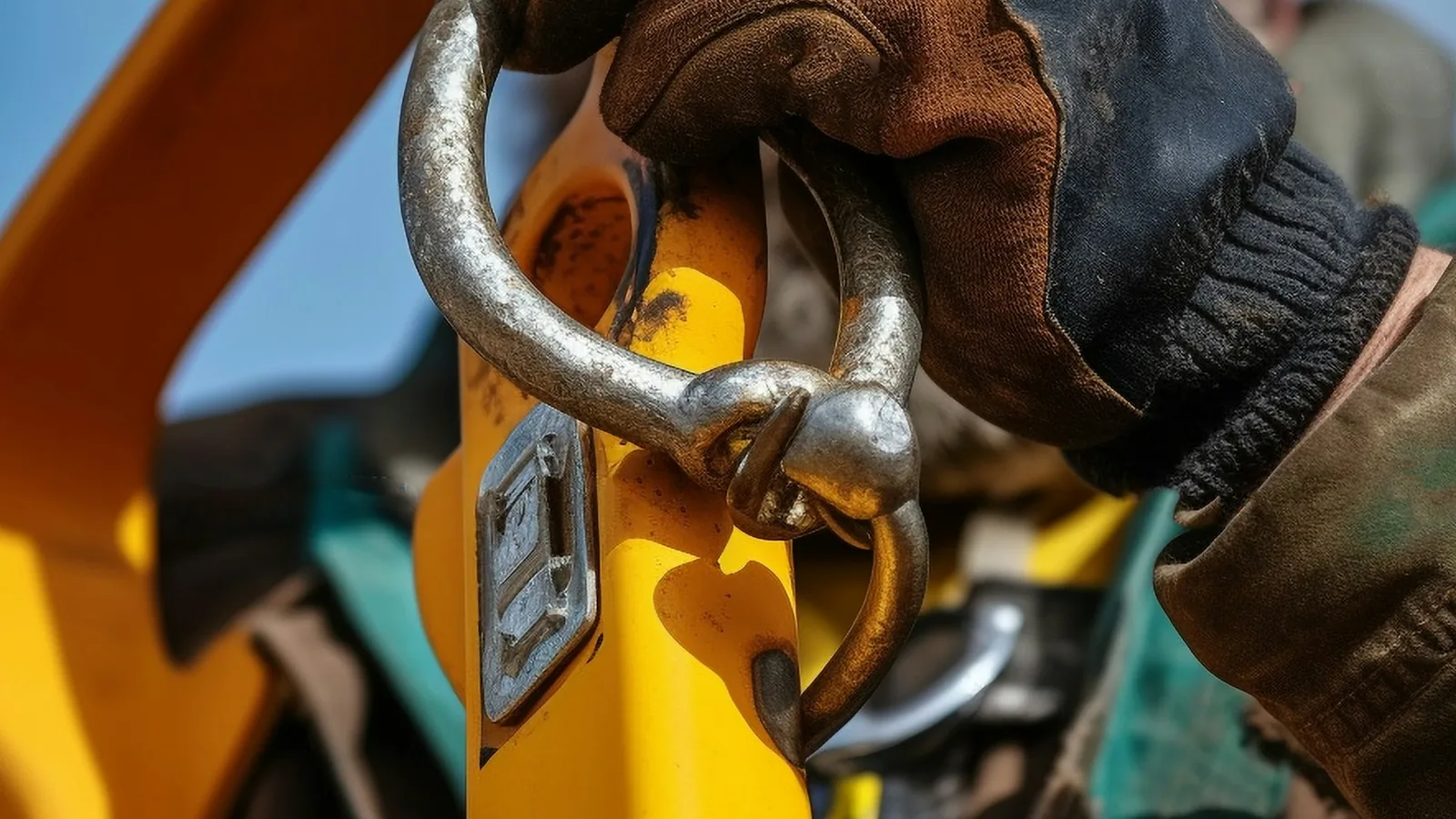
A pre-use harness inspection is a hands-on check that catches torn webbing, a bent buckle, a missing label, or chemical damage before the harness has to stop a fall. Inspect the connecting device at the same time: if you use one, compare Class 1 self-retracting lifelines on length, housing, and fall clearance.
A full-body harness is only one part of a personal fall arrest system. It has to work with the right connecting device, anchor point, and rescue plan. But if the harness itself is damaged, the rest of the system does not matter much. Inspect it before use on every shift.
Inspect the harness at the intervals OSHA and the manufacturer set.
For general industry, OSHA requires inspecting personal fall protection systems before initial use and at the start of each work shift for mildew, wear, damage, and other deterioration or defective components. Construction rules require personal fall arrest systems to be inspected before each use for similar problems. The cited sections are 29 CFR 1910.140(c)(18) for general industry and 1926.502(d)(21) for construction. The person putting the harness on checks it first, and the employer makes sure that check happens.
A harness also needs a closer look after it has been stored in a hot truck, exposed to welding sparks, paint, concrete dust, battery acid, solvents, or weather. UV exposure, chemicals, and heat can weaken webbing without leaving a dramatic tear. If the harness has arrested a fall, it is done until the manufacturer or a qualified, authorized party evaluates it under the manufacturer's instructions. Do not return it to the equipment storage.
The manufacturer may also require periodic documented inspection by a competent person. Follow the instructions for that specific harness. A generic annual inspection sticker does not override a manufacturer's required interval, and a worker's quick pre-use check does not replace a required competent-person inspection.
Catch damage with the same step-by-step routine every time
Find a clean, well-lit spot. Hold the harness by the dorsal D-ring — the back ring that sits between the shoulder blades — and let the straps hang straight. This makes twisted or altered straps easier to see. Then work through the harness in the same order every time.
Find cuts and broken stitching in the webbing.
Run every inch of webbing slowly through your hands. Bend it enough to expose cuts and broken fibers. Look closely at the shoulder straps, chest strap, leg straps, sub-pelvic strap, and back webbing near the D-ring. Those areas take the most movement and often show damage first.
Take the harness out of service if you find cuts, fraying, burns, holes, heavy abrasion, pulled or broken stitching, hard or shiny spots, or webbing that is discolored, stiff, brittle, or swollen. Do not assume a small nick is harmless because it is not near a buckle. Fall-arrest loads move through the whole harness.
Pay special attention to contamination. A harness splashed with acid, solvent, fuel, paint, or unknown chemicals may be compromised even if it wipes clean. Concrete and other gritty materials can also grind away fibers over time. When there is doubt, remove it from service and check the manufacturer's guidance.
Confirm the buckles, adjusters, and D-rings hold
Inspect all metal hardware for cracks, bends, sharp edges, corrosion, distortion, and excessive wear. Operate each buckle and adjuster. Tongue buckles should seat cleanly in the grommets. Quick-connect buckles should lock fully and release only when intended. Adjusters should move when adjusted but hold the webbing when loaded by hand.
Check the dorsal D-ring, as well as any side or front D-rings on the harness. A D-ring used for fall arrest must not be bent, cracked, heavily corroded, or have sharp damage that can cut a connector. Side D-rings are commonly for positioning, not fall arrest. The attachment point has to be approved for the job and system. A harness with several rings does not make every ring a tie-off point.
If the harness has impact indicators, inspect them according to the manufacturer's instructions. Some designs show a deployed tear-web indicator or other visible signal after a fall load. If an indicator is activated, remove the harness from service immediately.
Verify the label identifies the harness.
The label is part of the equipment. It identifies the manufacturer, model, size, serial or lot number, applicable standards, warnings, and inspection information. A missing or illegible label can make it impossible to confirm whether the harness is suitable for the system, the worker, or the task.
Do not use a harness with an unreadable or missing label unless the manufacturer provides a legitimate way to identify and relabel it. Writing a name on the webbing with a marker is not a repair. Neither is using tape, zip ties, makeshift stitching, or a bolt to fix damaged hardware.
Adjust the fit so the harness protects the worker.
Inspection is not complete until the harness is on and adjusted correctly. The dorsal D-ring should sit high on the back between the shoulder blades. Leg straps should be snug, with enough room to move but not enough slack to slide a hand flat under the strap. The chest strap should be across the mid-chest area, not at the throat or down at the stomach.
A properly inspected harness can still hurt or fail to protect a worker if it is loose, worn backward, or connected incorrectly. Workers need training on the specific fall-protection system they use, including inspection, fitting, tie-off, swing-fall hazards, clearance, and what happens after a fall. An OSHA outreach card or an online completion certificate does not replace that employer-provided, site-specific training.
Keep a failed harness away from the next worker.
Do not hang defective equipment back on the rack for the next person. Tag it clearly as DO NOT USE, remove it from the work area, and tell the supervisor or person responsible for fall-protection equipment. Follow company procedure and the manufacturer's instructions for disposal, return, or authorized evaluation.
Do not repair a harness in the field unless the manufacturer specifically authorizes the repair and it is performed through its approved process. A coworker may be excellent at repairing slings, welding brackets, or keeping equipment running. That does not make a sewn web harness repair safe or approved.
The same rule applies to lanyards, self-retracting lifelines, rope grabs, connectors, and anchors. A clean harness attached to a damaged lanyard is not a safe system. Inspect the complete system before elevated work starts.
Find the damage that quick checks miss.
The most common bad inspection is the two-second visual check while walking toward the lift or roof edge. It misses abrasion under a strap, damaged stitching behind a buckle, and chemical exposure that changed the feel of the webbing. Another bad habit is treating a harness as personal gear that never needs review because it belongs to an experienced worker. Experience does not stop nylon from aging or metal from corroding.
Storage matters, too. Keep harnesses dry, clean, and away from direct sunlight, chemicals, welding spatter, sharp edges, and vehicle traffic. Do not leave them on a floor where forklifts, oil, and grinding dust can get to them.
Before the next climb, put your hands on every strap, work every buckle, read the label, and reject anything questionable.