Blog · Powered industrial trucks · 29 CFR 1910.178
How to Conduct a Forklift Precheck Before Shift
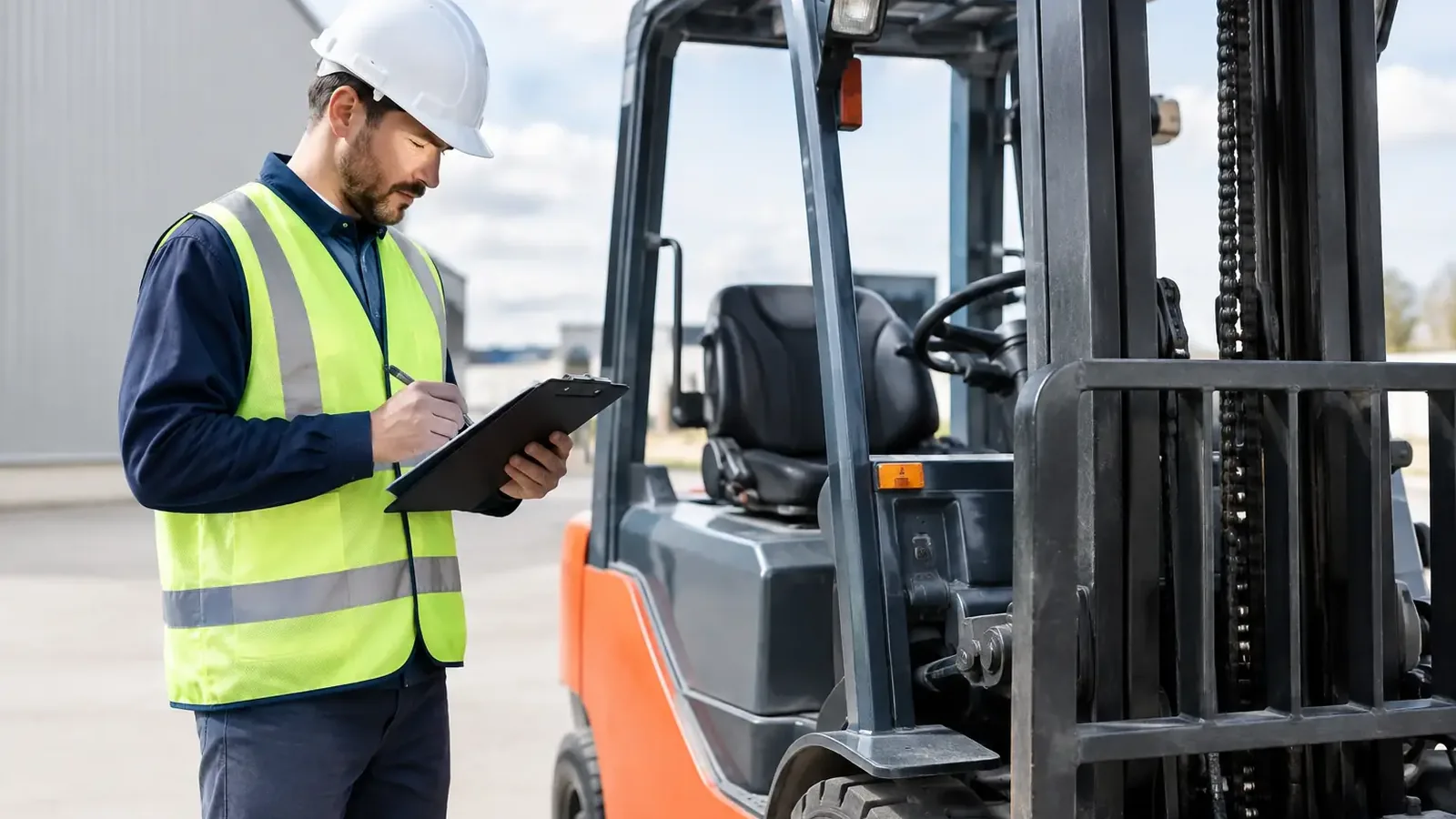
A forklift can look fine from across the dock and still be one bad brake pedal, leaking hose, or cracked fork away from hurting somebody. Knowing how to conduct forklift precheck inspections is not paperwork for the office. It is the last chance to find a problem before a powered industrial truck starts moving pallets around people, rack legs, trailers, and loading docks.
OSHA requires powered industrial trucks to be examined at least daily, or after each shift when they are used around the clock. If the inspection finds a condition that affects safe operation, the truck must be taken out of service until it is repaired. That is the line. A supervisor cannot talk a bad truck into being safe because the shipment is late.
Start the forklift precheck before you start the engine
Park the truck in a safe area, lower the forks, set the parking brake, and make sure the controls are neutral before beginning. Keep the inspection form for that specific truck nearby, but do not let the form do the seeing for you. Manufacturers set inspection points for their equipment, and the type of truck matters. An electric stand-up rider, a propane sit-down truck, and a diesel rough-terrain forklift do not have identical failure points.
Walk around the truck slowly. You are looking for obvious damage, missing pieces, and evidence that something is leaking, loose, or wearing out. A quick lap while checking your phone is not an inspection.
Look at the forks first. Check for cracks, bends, excessive wear, uneven fork tips, damaged locking pins, and signs that one fork is sitting lower than the other. Forks carry the load. If they are bent or cracked, the problem is not cosmetic. Check the carriage, mast channels, lift chains, rollers, hoses, and cylinders as well. Watch for worn chain links, damaged hose coverings, fluid leaks, and bent or missing hardware.
Then check the truck itself. Tires should not be badly worn, chunked, flat, or missing pieces. On cushion-tire forklifts, a worn tire can change stability and ground clearance. On pneumatic tires, check inflation and sidewall damage. Look under the truck for oil, hydraulic fluid, coolant, or fuel. A fresh puddle is a reason to stop and find out where it came from, not a reason to grab a rag and drive away.
For an internal-combustion truck, inspect the fuel system. Propane cylinders must be secured properly, with the relief valve positioned as required by the cylinder manufacturer and the truck setup. Check the hose and connections for damage or leaks. Do not test for a propane leak with a lighter. That shortcut belongs nowhere near a fuel system. Check engine oil, coolant, and other fluid levels according to the manufacturer’s instructions.
For electric forklifts, inspect the battery, restraint, cables, connectors, and charging plug. Look for damaged insulation, corrosion, loose connections, or electrolyte leaks. Battery charging and changing bring electrical, chemical, and fire hazards into the picture. If a connector is damaged or a battery is shifting in its compartment, tag the truck out and report it.
Check the operator’s station, not just the outside of the truck
A forklift precheck also means making sure the operator can stay in control. Check the seat and seat belt, or the restraint system designed for that truck. A seat belt that will not latch is not a minor annoyance. On a sit-down counterbalanced truck, the restraint helps keep the operator inside the protective zone if the truck tips.
Check the overhead guard for damage, the load backrest extension if equipped, mirrors, lights, warning labels, data plate, and fire extinguisher if the truck is equipped with one. The data plate needs to be legible because it tells the operator what the truck can safely lift in its current configuration. A forklift’s rated capacity can change when an attachment is installed, the load center changes, or the mast is raised. Guessing is how loads come off forks.
Make sure the area around the pedals, directional controls, and control levers is clear. Loose shrink wrap, water bottles, gloves, and trash can interfere with controls at exactly the wrong time. Check that the horn works. If the truck has lights, a backup alarm, strobe, camera, or other warning device, verify that the equipment works as intended. These devices do not replace looking in the direction of travel, but a dead horn or failed alarm still needs attention.
Perform the operational check in a clear area
The visual inspection happens with the truck off. The operational check happens after startup, in a clear location away from pedestrians, stacks, dock edges, and traffic. Do not pull into an active aisle and test the brakes with people walking behind you.
Start the truck and listen. Unusual knocking, grinding, squealing, or a hydraulic whine that was not there yesterday can point to trouble. Check gauges, indicator lights, and battery or fuel readings. Then test the service brake, parking brake, steering, and directional controls at low speed.
Raise and lower the forks, tilt forward and back, and operate any side-shift or attachment controls. Watch for jerky movement, drifting, delayed response, chatter, or hydraulic leaks. The mast should move smoothly and the chains should travel evenly. Test the horn again if needed, along with lights and other warning devices. Do not conduct this test with a load suspended or a coworker standing close to the mast.
If steering feels loose, brakes pull or fail to hold, the mast drifts, or a control does not respond correctly, the truck is not ready for production. The fact that it still moves is not the standard. Safe operation is the standard.
What to do when the precheck finds a defect
Take unsafe equipment out of service immediately. Park it safely, lower the forks, shut it down, remove the key if your site procedure requires it, and mark it clearly so another operator does not climb in and use it. Notify the supervisor or maintenance process your employer has established.
Be specific in the report. “Forklift bad” does not help maintenance diagnose the problem. “Right tilt cylinder leaking at fitting,” “parking brake will not hold on slight grade,” or “left fork locking pin missing” gives the next person a real starting point. Do not make an unauthorized repair, bypass an interlock, or keep running the truck until maintenance gets around to it.
A common bad decision is borrowing a truck from another department without checking it because “it was working earlier.” Earlier is not this shift. OSHA’s inspection requirement follows the truck’s use, and each operator has a duty to avoid operating equipment that is visibly unsafe.
The inspection form is proof of the check, not the check itself
Your employer should provide a pre-use inspection process that matches the truck, attachments, work environment, and manufacturer guidance. The form might be paper, a clipboard sheet, or a digital record. Any of those can work if the operator actually inspects the machine and defects get corrected.
Do not pencil-whip the form. A completed checklist cannot stop a forklift with failed brakes. It can, however, show a recurring defect, help supervisors spot maintenance trends, and establish that a truck was removed from service when it should have been.
Also keep the boundary clear: a wallet card, online course completion, or OSHA 10 card does not authorize someone to operate every forklift on the property. OSHA requires employer-provided training, evaluation, and training specific to the truck and workplace conditions. The precheck is part of competent daily operation, but it does not replace operator training or the employer’s responsibility to maintain equipment.
A precheck has to fit the job in front of you
The basic inspection points stay consistent, but the work changes the risk. A warehouse truck working smooth concrete may have different concerns than a rough-terrain forklift on a muddy jobsite. A truck moving standard pallets indoors may need a closer look at attachments before handling long loads, coils, bins, or suspended loads.
Pay attention to what changed since the last shift. Was the truck used in a trailer with a damaged dock plate? Did it hit a rack upright? Did someone change the propane cylinder, install a carton clamp, or run it through standing water? Those details can turn a routine check into a necessary stop.
The best precheck is not the fastest one. It is the one that keeps a defective truck from entering the aisle. Production can wait for another truck. A crushed foot, dropped load, or forklift tip-over does not wait for the end of the shift.